The time when the Dagupan City Water District, then known as the Dagupan Waterworks and Sewerage Administration or DAWASA, was managed and operated by the Dagupan City government and held office at the back of the Dagupan City Hall.
It only had 12 pumping stations operating on turbine pumps and its only concessionaires came from the downtown area. A takeoff from the old DAWASA, DCWD was born from the womb of Resolution No. 1463-87, unanimously adopted by the Sangguniang Panlungsod on April 20, 1987 during the post-EDSA term of the late Mayor Liberato Ll. Reyna. Its creation was based on Presidential Decree No. 198 (Provincial Water Utilities Act) issued by the late President Ferdinand E. Marcos, which authorized local government units to create their own water districts subject to existing laws, rules, guidelines and regulations.
On the basis of the city council resolution, the Dagupan City Water District started operations on July 28, 1987 with a Conditional Certificate Conformance (CCC No. 287) pursuant to the provisions of PD 198. After its formation, DCWD acquired ownership and management of DAWASA, which had been dissolved. Serving as the first General Manager of DCWD was Engineer Silverio C. Coquia.
Its head office was then located at the foot of the giant water tank, then the main water reservoir, and which Dagupeňos simply referred to as the “tangke.” Today, the tangke, located in the City Hall compound, which could have otherwise turned into a relic and consigned to the dustbin of history, is still an active facility of DCWD, with an air-conditioned office that serves as an extension collection unit.
Like any of its counterparts elsewhere in the country, DCWD typifies the new management model for urban water supply. It is performing as a Government-Owned and/or -Controlled Corporation (GOCC) by virtue of a special memorandum of agreement on March 31, 1992. Operating with a certain degree of autonomy from the city government, it has continually and consistently received technical assistance and financial support from the Local Water Utilities Administration (LWUA). LWUA is the national government agency granted with regulatory powers to optimize public service for water service providers, such as local water districts.
The July 16, 1990 powerful earthquake wrought extensive havoc on many parts of Luzon, especially the City of Dagupan. Buildings, roads, bridges and other infrastructures collapsed, not sparing the Dagupan City Water District, thus greatly damaging its water distribution lines, pumping stations and almost crippling the district’s operations. Because of the Richter Scale-recorded 7.8 magnitude earthquake that devastated Luzon, roads were impassable due to indescribable cracks, people were displaced from their residences, and livelihood was greatly affected. People suddenly faced a jungle-like “survival of the fittest” situation.
Damage was particularly heavy in Dagupan City and its environs where eyewitnesses reported sand-boils, fountains and cracks with the emission of water and sand. Earthquake liquefaction caused buildings and other structures to sink as much as one meter. Thus, Dagupan suffered from scarcity of potable water for more than two years.
About 95% of water distribution lines and 10 of 12 pumping stations of DCWD were badly hit. In the service area of DCWD, water services grounded to a halt. The water district’s loss from the powerful earthquake was estimated at about P30-million. With no subsidy from the national government and merely relying on its own measly fund as a self-generating entity, resumption of water district operations was hard to imagine. But imbued with the typically resilient Dagupeño spirit, DCWD struggled to rise from the crisis.
The management was mindful of the predicament. It did not lose hope to find answers to the problems at hand. But time was of the essence; hence, DCWD personnel worked doubly hard to rehabilitate the damaged distribution lines and pumping stations and resume operations at full blast. Time constraints, disgust from concessionaires, and the unstable condition of service areas were not the only hindrances. Budget requirements and how and where to source them out likewise constituted painstaking burdens.
It was during this crucial time that Ramon C. Reyna, a certified public accountant and internal auditor of the Luzon Colleges (now University of Luzon), was appointed General Manager. Fully supported by the board of directors, employees, concessionaires and other external stakeholders, such as the national government, mainly through the Local Water Utilities Administration (LWUA), and the local government of Dagupan City, GM Reyna led the herculean task of rehabilitation.
In 1992, the Dagupan City Water District secured a loan from LWUA amounting to P131, 472, 086.49 to undertake a massive rehabilitation program from 1992-1994. An entirely new water system was constructed which replaced the old one. The new system was completed on April 7, 1994, consisting of one (1) 2,450-cubic meter ground reservoir and 3 new deep wells with a capacity of 25 to 30 liters per second (lps). The 12 damaged pumping stations were likewise rehabilitated. The District’s pipelines were increased to a total length of 28,512 lineal meters, with sizes ranging from 50 to 600 millimeters in diameter. The system was by then good for 10,000 service connections.
This period was the beginning of reform and development of DCWD, recording an average increase of concessionaires and pump output of 15-20% per year. It was also during this time (1994) when the peak-hour pump house and the 2,500-cubic meter capacity water reservoir began its operation. In 1999, there were already 15 deep wells in operation and all turbine pumps were replaced with modern and submersible pumps and motors. These state-of-the-art pumps and motors are silent, efficient and easy to handle in case of machine breakdown.
Dagupan City Water District proudly operates as a premier water district in Northern Luzon. Its P30-million three-story Administration Building and head office in Barangay Tambac boasts of state-of the-art and fully air-conditioned corporate offices, board room, electronic data processing room, water testing laboratory, function rooms, training center, 10 fully air-conditioned and fully furnished guest billeting rooms, library, canteen, fitness center, and chapel. The main reservoir of the water district and peak hour pump house are also part of its facilities here.
Following GM Reyna’s retirement in 2013, Adelfo B. Valle, Division Manager, Engineering Division, and a civil engineer by profession, took over as DCWD General Manager. He brings to his position a wealth of experience and savvy as top hat of the District’s sensitive and frontline division for 6 years. Before that, he had been Division Manager of the Commercial Division for 17 years and 3 months. He will go down in DCWD history as the last GM under Category C and the first under Category B.
After GM Valle, who retired in February 2020, then Department Manager Rizaldy T. Mandap of the Engineering Services Department took over the helm of DCWD. Like his predecessor, Mandap is a licensed civil engineer. He joined the DCWD workforce on March 27, 2006 as Instrument Technician A after serving as Division Manager C, concurrently OIC General Manager, Mabalacat Water District, Mabalacat, Pampanga, March 24, 1997 to June 15, 2002. Prior to joining the Mabalacat WD, Mandap worked with the Mt. Pinatubo Commission, Angeles City.
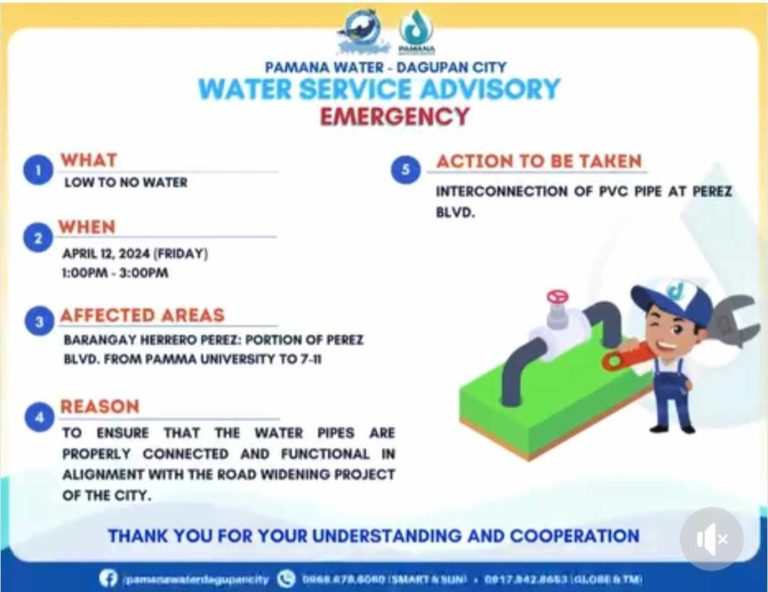
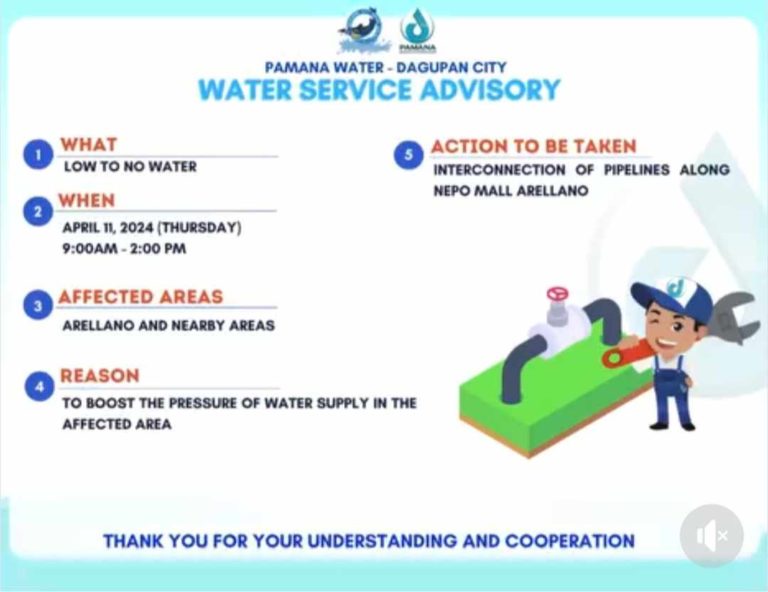
Engineer Mandap is the last General Manager of the DCWD before the Joint Venture Agreement between DCWD and the Pamana Water Corporation and the first General Manager of the DCWD Contract Monitoring Unit under the Joint Venture Agreement between DCWD and the Pamana Water Corporation.